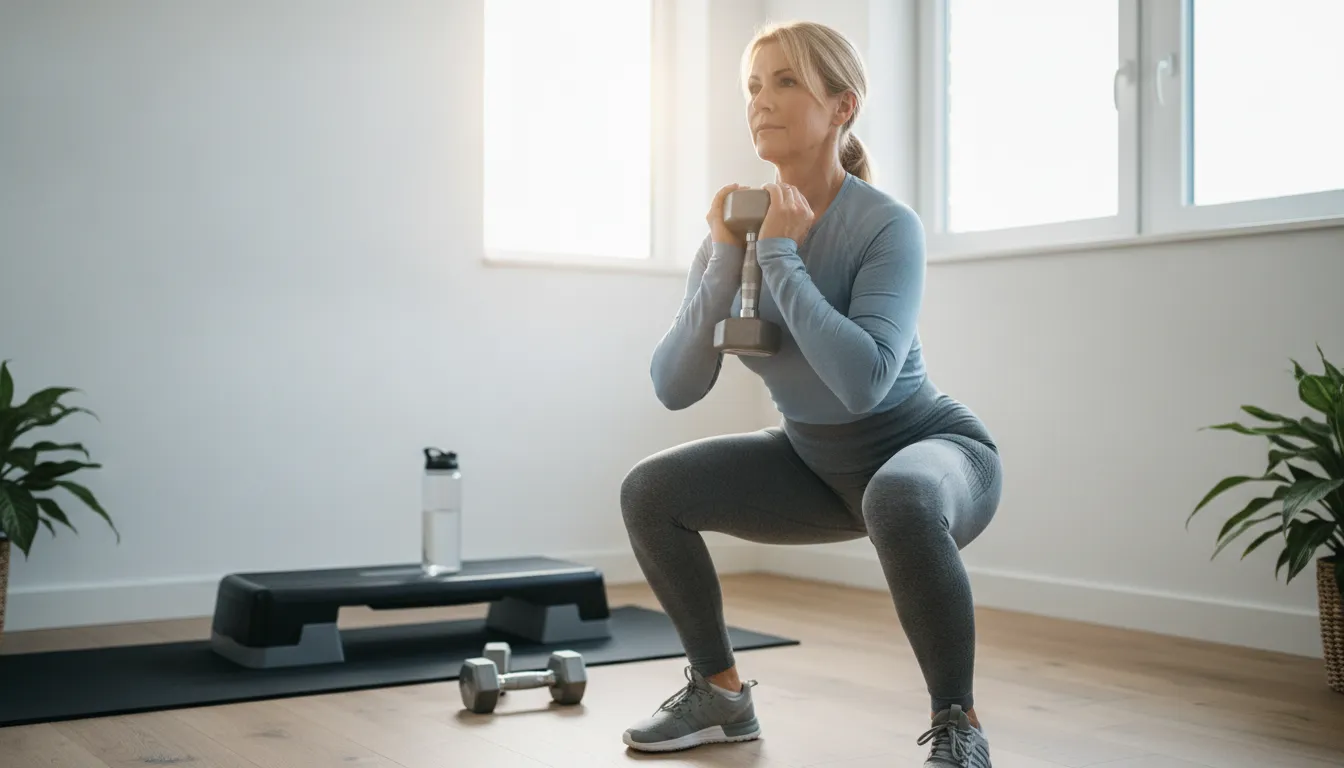
Engaging in strength training is among the greatest activities one can perform for the body after the age of 50. By doing so, you build your body muscles, better your bone density, increase your energy, aid in the proper function of your metabolism, and give yourself a sense of strength in the daily routines.
No complex exercise, endless cardio, or hours in the gym is needed for you to get real results. A proper smart full body weight training program plus the execution of the plan regularly, with good form, having enough recovery, and a gradual increase in the weight you lift is all you need.
This training program has been designed to be uncomplicated, effective, and the best. It requires 35 to 45 minutes and is primarily done with dumbbells, works out all the major muscle groups, and can be done twice a week by adding a few days of recovery in between the sessions.
Critical: For medical issues like injuries, osteoporosis, joint pain, or if you are returning to exercise after a long time, it is essential to consult your doctor or a qualified healthcare professional before you start a new training program.
Table of Contents
- Why Weight Training Matters More After 50
- The Smart Starting Point: Full Body Training Twice Per Week
- The Full Body Dumbbell Workout
- 1. Dumbbell Front Squat: Legs, Glutes, and Core
- 2. Dumbbell Stiff-Leg Deadlift: Glutes and Hamstrings
- 3. Two-Arm Dumbbell Row: Back, Arms, and Stability
- 4. Dumbbell Chest Press: Chest, Shoulders, and Triceps
- 5. Standing Shoulder Press: Strong Shoulders Without Stressing Your Back
- 6. Biceps Curls and Lying French Press: A Simple Arm Superset
- 7. Finish With Focused Core Work
- How Hard Should You Train?
- Progression: The Secret to Getting Stronger
- A Simple Weekly Schedule
- Key Form Reminders for Every Exercise
- FAQ
- Start This Week
Why Weight Training Matters More After 50
Perimenopause and menopause are the stages in a woman's life when there is a decrease in estrogen. Estrogen is the one that increases the health of the bones and the deficiency of estrogen can lead the person to the condition of osteoporosis. This is the reason fracture risk becomes a major concern as women move to older age.
When you do weight training, you give your bones and muscles a stimulus to keep strong. Strength training is a way of putting a specified load to the body, which will help the bones become stronger and maintain the muscle tissue.
The importance of muscle for more than just looks is what we are talking about here. Primarily, muscles are what make us strong and when we lose muscle mass, we also lose strength. Even uncomplicated movements like carrying groceries, stairs climbing, floor getting up, suitcase lifting, and grandchildren playing can become harder to do. Building and keeping your muscles fit is a way to make your everyday activities easier and thus maintain your independence.
Another factor involved in this is metabolism. Along with the reduction of muscle mass, the body also tends to be less active. As a result, the person is trapped in a vicious cycle of being weaker, moving less, gaining body fat more easily, and losing even more muscle. Weightlifting is the helpful method that breaks this circle.
- Stronger bones: Resistance exercise helps combat age-related losses in bone density.
- More lean muscle: Training preserves and builds the tissue that keeps you strong and toned.
- Better metabolism: Maintaining muscle supports a healthier metabolic rate.
- Improved energy and confidence: Getting stronger changes how you feel in your body.
- Better long-term function: Strength supports the movements that make life easier and more enjoyable.
The age you are now, whether it is the 50s and 60s or more, doesn't hinder your ability to build mass strength and become slim. This is the case regardless of your previous experience with regular workouts.
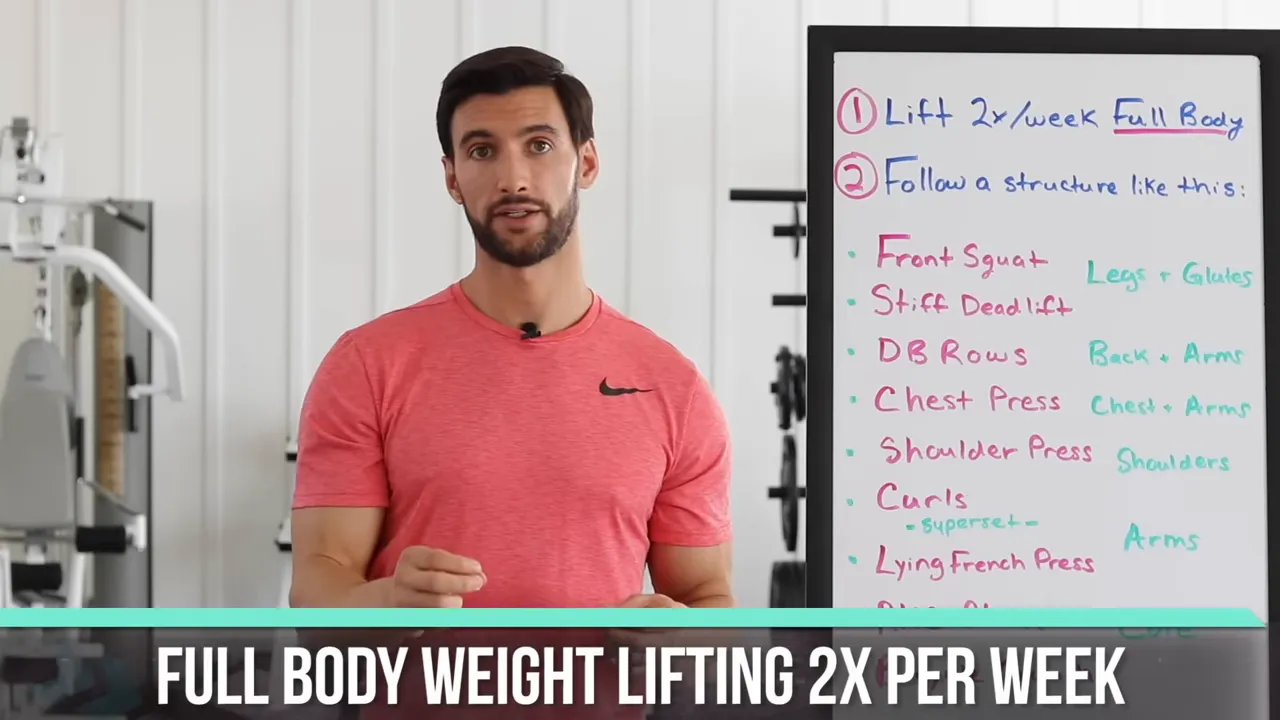
The Smart Starting Point: Full Body Training Twice Per Week
The most favorable initial frequency can be two times a week full body workouts. To illustrate, you can work out on Monday and the same again on Thursday or Friday. This activity serves as a training stimulus for your muscles, following which it offers sufficient recovery time for adaptation and strengthening.
He breaks up the sentence in a way:- In, not a break from progress, recovery. It is, instead, a part of the progress. Without the three words--do, not, the, this sentence would read differently: Through workouts, muscles snap, repair and grow stronger. They grow, by the way, after the workout, when the body gets the time to fix and adapt.
This doesn't imply that you should be completely inactive on the rest days of weightlifting. You can try walking, light cardio, and other enjoyable movements that you like. The main thing is not to change every single day into another power workout.
Instead of segregating your workouts by doing one day for arms, another for legs, and a particular day to focus on chest, it is better to train the whole body in each session. Full body workouts are effective and time-efficient as they involve the basic movement patterns that need to be performed by your body.
- A squat movement for the legs and glutes
- A hip hinge movement for the glutes and hamstrings
- A pulling movement for the back and biceps
- A pushing movement for the chest, shoulders, and triceps
- Direct shoulder and arm work
- Focused core training
Select a weight that is hard but still manageable and permits you to maintain a controlled, safe technique. In most cases, you should conclude a set thinking that you are capable of doing two or three more good repetitions. The aim is not to fall down after each set. The aim is to smartly make your muscles work more and recuperate well to be fully fit to do it again.
The Full Body Dumbbell Workout
As a rule, perform three sets for the majority of the exercises listed here. Intermittent breaks of about 60 seconds should be taken, but you can extend it to 90 seconds or even two minutes if necessary. This is strength building, not cardio. To ensure each set is effective, take the necessary rest.
Go slow, keep your emotions in check, and focus on doing the right thing. A light dumbbell that is lifted with control will give you more results than a heavier dumbbell that is lifted with bad technique.
Workout at a Glance
| Exercise | Sets | Repetitions or Time |
|---|---|---|
| Dumbbell Front Squat | 3 | 8 to 15 reps |
| Dumbbell Stiff-Leg Deadlift | 3 | 8 to 15 reps |
| Two-Arm Dumbbell Row | 3 | 6 to 15 reps |
| Dumbbell Chest Press | 3 | 6 to 15 reps |
| Standing Dumbbell Shoulder Press | 3 | 6 to 15 reps |
| Standing Biceps Curl | 3 | 6 to 15 reps |
| Lying French Press | 3 | 6 to 15 reps |
| High-Tension RKC Plank | 1 or more | 20 to 60 seconds |
| Bicycle Crunch | 1 or more | 30 to 60 seconds |
1. Dumbbell Front Squat: Legs, Glutes, and Core
Front squat is actually an unparalleled first exercise that targets almost all major muscle groups. The shoulder placement of the dumbbells, on the other hand, also needs you to keep your abs tight so the weights won't toss you forward.
Grab one dumbbell in each hand while you keep them at shoulder level. The dumbbells can be safely and comfortably placed on the front side of your shoulders. Place your legs slightly wider than shoulder width, tighten your core, and remain upright with your chest.
Then, with your body in a sitting position, begin to lower yourself into the chair. Descend with a steady movement, pause briefly in a position that feels comfortable for your mobility at the bottom, and then press through your feet to stand back up.
Maintain a steady motion throughout the process. Avoid dropping it very fast, jumping out of the bottom, or allowing the weights to tilt your chest downward. Your abdominal muscles should remain contracted continuously from the initial rep until the final rep.
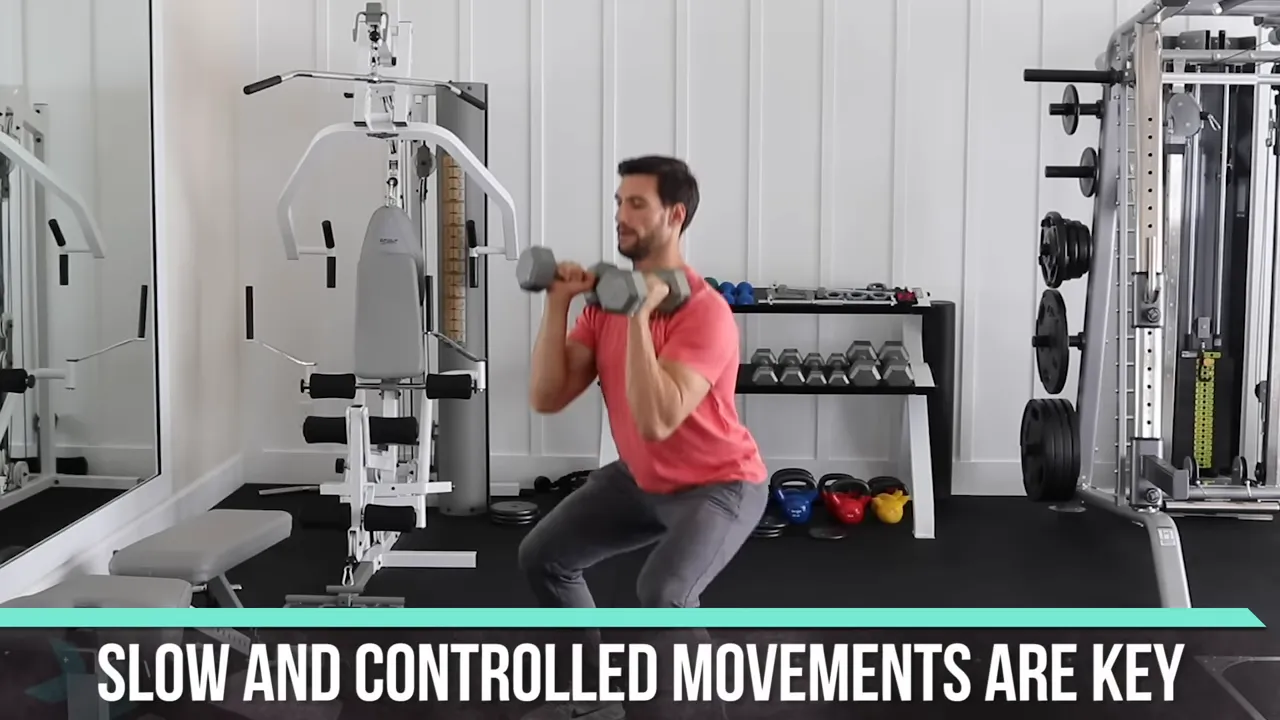
Execute 3 sets of 8 to 15 reps in total. Take rest of about 60 seconds between sets.
2. Dumbbell Stiff-Leg Deadlift: Glutes and Hamstrings
The second leg exercise is the hip hinge. Unlike squats, which primarily work on going down and coming up through the knees and hips, the stiff-leg deadlift fully concentrates on the hip hinge. It mainly targets the glutes and hamstrings, making it a great choice for developing these muscles.
Hold the dumbbells in front of your thighs while standing. Keep your back flat, have a small knee bend and move your hips backward as you lower the dumbbells close to your legs. You do not need to keep your legs perfectly straight. A little bend in your knees is absolutely fine.
Keep your back flat and lower to the point where you can feel the stretch in your hamstrings. Stay in Position with your back flat, then push through your glutes and hamstrings to go back to standing. At the upper position, contract your glutes tightly.
The dumbbells need to remain nearby your legs with every movement. It is not a must for them to touch you, however, the best way to do this is to keep them in a close range, which will help you not only to maintain a control but also to do the hinge pattern efficiently.
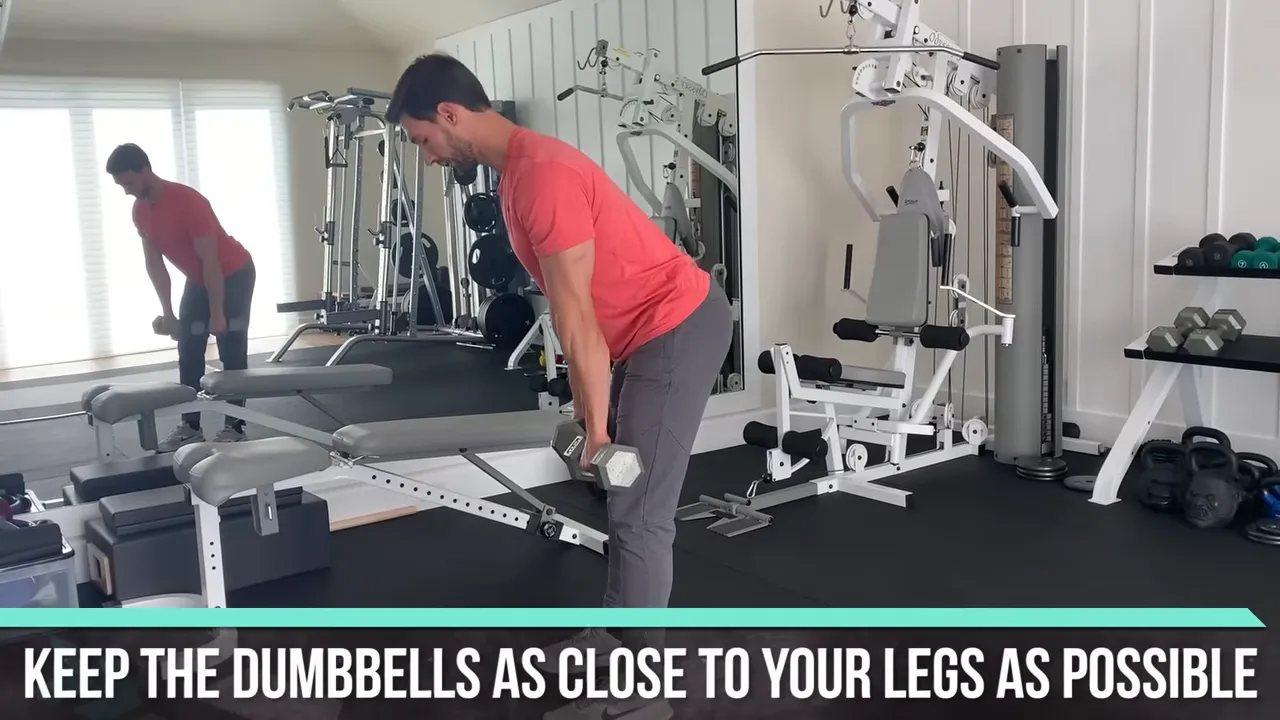
Do 3 sets of 8 to 15 reps each. Take a rest of about 60 seconds between your sets.
3. Two-Arm Dumbbell Row: Back, Arms, and Stability
Transition from the squat and hip hinge immediately to your pulling work with dumbbell rows. Rows are perfect for working the back and biceps and at the same time for the glutes, hamstrings, and core to be active in the bent-over movement.
In the same position as your deadlift, you would set your body up. Hinge forward while keeping your back flat, your head should be in a straight line with your spine, and the dumbbells should hang down below your shoulders. The dumbbells are pulled to your torso by the driving of the elbows backward.
Squeeze your shoulder blades together and take a brief pause at the beginning of the row. Don't rush; instead, lower the weights slow and controlled.
The one-arm bench-supported dumbbell row can also be a good exercise. But the two-arm version really engages the entire back chain, thus, it also adds to the core, glute, and hamstring training while you work on your back.
Perform 3 sets of 6 to 15 reps each. Depending on your choice, you can lift heavier weights for fewer reps or lighter weights for more reps while still maintaining a proper posture throughout the exercise.
4. Dumbbell Chest Press: Chest, Shoulders, and Triceps
Dumbbell chest press is a very effective upper-body strength exercise to be done on a bench with dumbbells and while training the chest, the shoulder, and the triceps.
Begin by sitting at the end of a bench and placing the dumbbells beside your hips. Roll back smoothly into the starting position with your feet firmly on the ground and the shoulders on the bench. Then, you can push the dumbbells up and hold them tight at the highest point.
Gently lower the dumbbells with precise control, permitting the elbows to flex as the dumbbells descend. Stop for a while, then return the press.
After the set, do not make a forced awkward exit that may hurt your shoulders. If the weights are light, sit up with caution. However, if they are heavy, it is appropriate to drop them to the ground safely instead of trying to adjust them by force.
This movement can be practiced on a horizontal bench or an upturned bench if it is intended for an incline press. Each of these pressing methods has its own advantages. Don't have a bench at home? You can do push-ups that are similar to the same pushing pattern. Begin with your toes if possible, or modify the position by using your knees.
Complete 3 sets of 6 to 15 reps.
5. Standing Shoulder Press: Strong Shoulders Without Stressing Your Back
Shoulder muscles, as already indicated, are involved during the rowing and pressing of the chest, but shoulder pressing purely increases the level of training aimed at these muscles. In this case, dumbbells should be lighter than those you have applied for squats, deadlifts, or chest presses.
Lift the dumbbells to the level of your shoulders. Position your legs shoulder-width apart and contract your core muscles. Extend the dumbbells above your head, hold for a moment, and then lower them in a controlled way.
The principal form signal is straightforward: don't banana your back. In the overhead weight lifting, there is no need to lean back and over-arch the back. Maintain the braced position of your abs and keep control over your ribs to engage the shoulders instead of your lower back having to do the work.
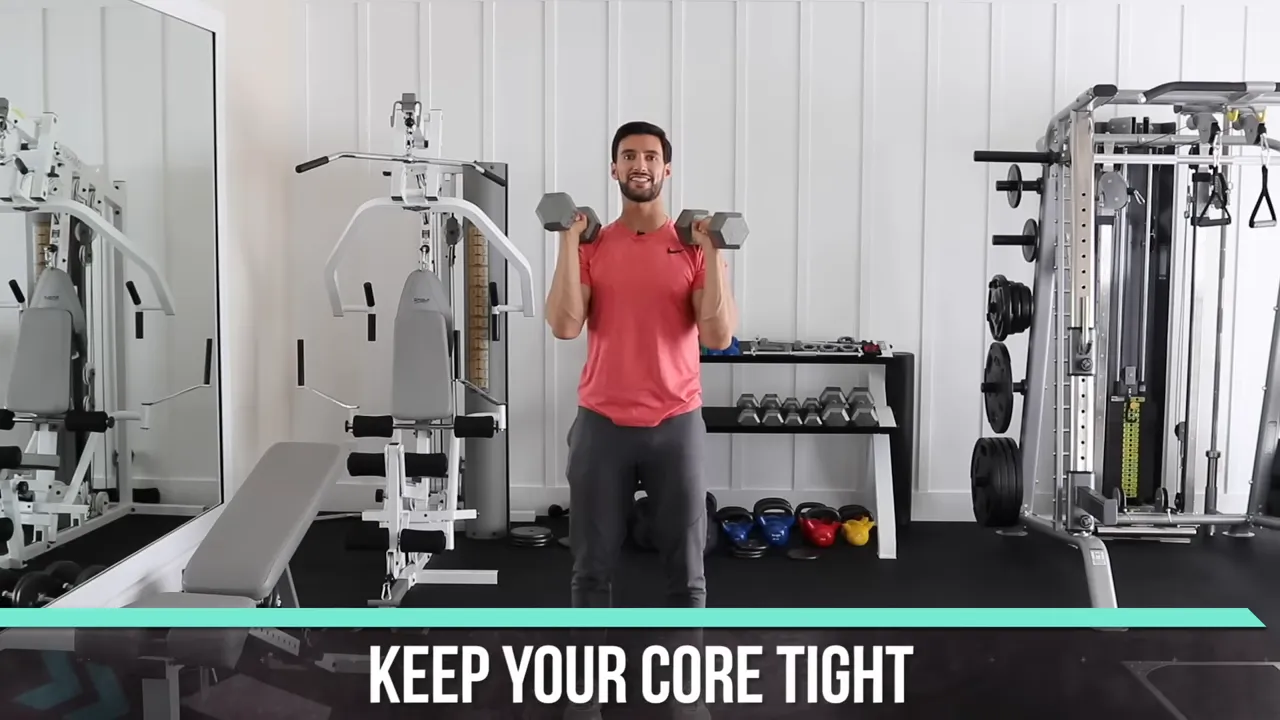
Formulate 3 groups of 6 to 15 repetitions. You can take a break of 60 to 120 seconds after each set as required.
6. Biceps Curls and Lying French Press: A Simple Arm Superset
Now, you can continue your upper body workout with some isolated arm exercises. The biceps curl and lying French press are done as a superset. Superset means you first perform a set of curls, move right into a set of French presses without resting and then rest before repeating the pair.
Standing Biceps Curl
Be like a tree lifted in a rush of air, tipping and swaying back and forth. Thus, you will also learn how to curl one arm at a time or curl both arms together. The most important thing is to draw your awareness on the contraction of the biceps instead of the swinging of the weights.
The one-arm curls are a good exercise for the concentration of each side independently. Together, the arms curling both is also a great choice allowing greater core control as it consists of both dumbbells pulling the body frontwards at a time.
Finish 6 to 15 reps with a slow and controlled eccentric phase.
Lying French Press
Lie on a flat bench and press the dumbbells directly above your chest. Try not to move the shoulders, bend only the elbows and lower the dumbbells just outside your head. Then, use the triceps to fully extend the elbows and bring the dumbbells back to the starting position.
The exercise which is commonly termed as a skull crusher needs to be performed with a controlled and deliberate form of exercise. Do not allow the shoulders to drift backward. The elbows perform the motion and the triceps are the muscles that do the work.
Perform 6 to 15 reps right after curls. First, rest after both exercises are done, and then repeat for a total of 3 supersets.
7. Finish With Focused Core Work
The core of you has been engaged in all the activities. The performance of squats, deadlifts, rows, presses, and curls benefited from it. Nevertheless, including a little bit of direct core training is a good closing for this workout.
High-Tension RKC Plank
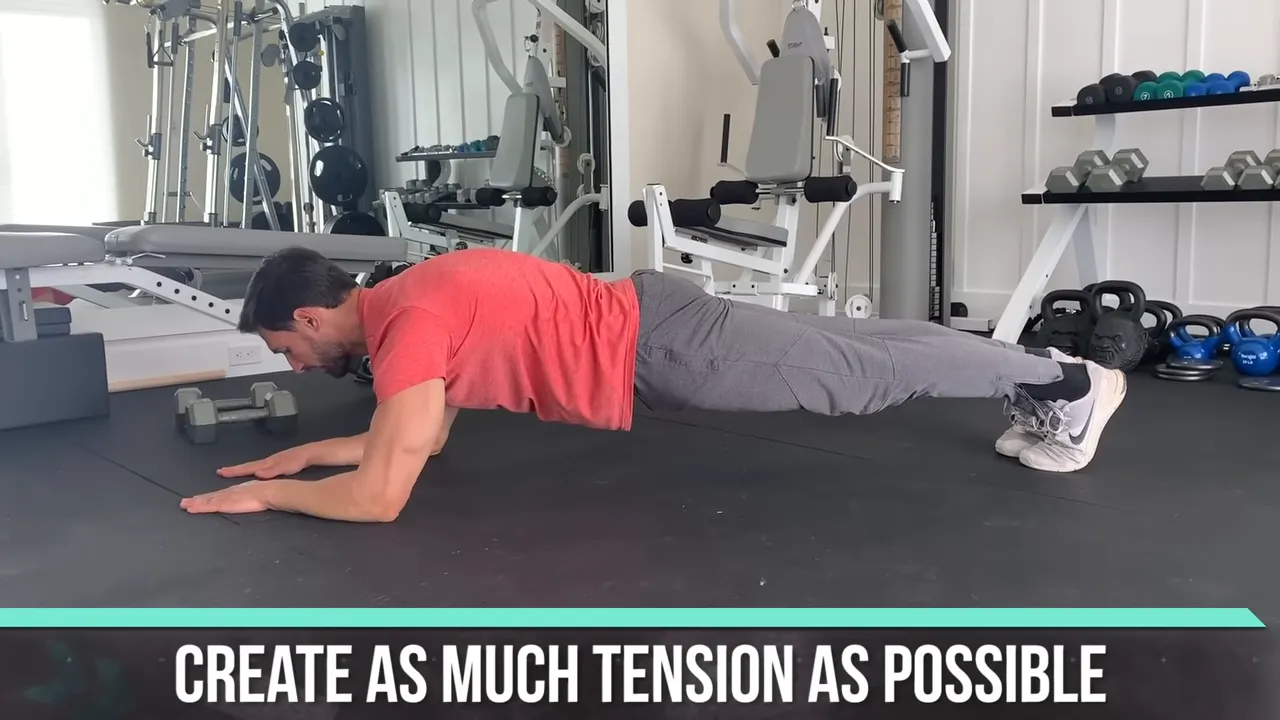
RKC plank is not about staying in a loose plank position for several minutes. It is about full-body tension.
Place yourself on your forearms with your feet being behind you. You should perform the action of pushing away from the ground, and at the same time, shifting slightly back, contract your glutes and hamstrings, make your legs tight, tighten your abs, then create as much tension as you can.
A high-tension plank can be even more challenging than a long, relaxed plank, actively absorbing everything. Hold for 20 to 60 seconds.
Bicycle Crunch
Following a brief relaxation, find yourself in the supine position with your hands inserted lightly at the back of your ears. Lift into a controlled twisting crunch, alternating from side to side. Maintain your chin upward as opposed to curling your head tightly downward into your chest.
The task is not to hurry up. Rotate mindfully, remain open through the chest, and feel every contraction. Keep going for 30 to 60 seconds.
How Hard Should You Train?
A prime working load is the one that pushes you but does not cause your form to break down. If, after completing 15 repetitions, you feel like you could do 10 more, then the weight is definitely too light. Besides, you are not necessarily required to push each set to a point where one more repetition cannot be completed.
A nice goal is to finish with approximately two or three reps in reserve. This indicates that the set is difficult, but you are still able to do a couple more repetitions with a good technique if you have no other choice.
A work area is available for fluctuating weight in a higher repetition range. A larger weight is likely to make you do six, eight or ten repetitions close to it. However, a smaller weight might provide you the opportunity of doing 12 to 15 repetitions. Set the weight both ways means challenging and controlled set of exercises are effective.
Adapt your rest periods consciously and not hastily. Set a 60 seconds rest period minimum but extend it if required. High-quality strength training demands high-quality recovery time in the form of rest periods between sets.
Progression: The Secret to Getting Stronger
It is a great idea to do the same exercises for both workouts weekly, particularly when you are a beginner. Repeating the movements gives you the opportunity to practice them, what makes it possible to adjust your form and track your progress.
This week you did front squats with 15-pound dumbbells and sets started to feel manageable, so it is time to try 20-pound dumbbells for next week when you are ready. Adopting the increase in difficulty in this manner is the key signal to your body to adapt.
In an instance where the weight is persistently the same and the work is not made tougher, your body will gain no reason to develop. So that is the reason why it is mandatory for you to keep a record of your workouts.
- Write down the exercise.
- Record the dumbbell weight used.
- Record the repetitions completed for each set.
- Increase the weight once the current load feels easier or you consistently reach the top of your target rep range.
The phone notes app is all you need. Just a notebook is sufficient. The method is not the issue. What matters is keeping track of what you did so that you can make gradual improvements.
If you want to have some variety, you can substitute some exercises after four to six weeks, for instance, instead of doing the front squat, you can do sumo squat, or you can change the deadlift with a hamstring curl on a ball. But do not switch out exercises every class. You'll need to allocate time for yourself to master a motion, and as a result, you will be able to make it harder.
A Simple Weekly Schedule
Here is an easy structure to follow:
- Monday: Full body weight-training workout
- Tuesday: Walking, light cardio, or rest
- Wednesday: Walking, light cardio, or rest
- Thursday or Friday: Full body weight-training workout
- Weekend: Walking, enjoyable movement, and recovery
The power of consistency. It is not required for you to have an excellent plan executed for only two weeks. What you need is a feasible plan that you can carry out for several months.
Key Form Reminders for Every Exercise
- Move slowly and under control. Do not let momentum do the work.
- Brace your core. Your core should support nearly every standing movement.
- Use a full, comfortable range of motion. Work within positions you can control safely.
- Keep dumbbells close during hinges. This helps maintain a strong deadlift pattern.
- Keep the shoulders stable during French presses. Move at the elbows, not through the shoulders.
- Do not rush recovery. Strength training requires rest between hard sets and between workouts.
- Prioritize technique over weight. Strong, repeatable form is always the foundation.
FAQ
How often should women over 50 do weight training?
Two total body strength training sessions per week is a great starting point. Have a few-day break between the workouts so your muscles can heal and accommodate.
Can I build muscle after age 50 if I have never exercised before?
Absolutely! Building muscle mass and increasing strength in the age brackets of 50s, 60s and even beyond can be easily achieved through smart, consistent strength training. All that is required of you is to begin with weights that you can handle, to take control of your form, and to follow a routine that you find achievable.
How long should this full body workout take?
Plan for a workout that may last up to 35 to 45 minutes based on your breaks, weights lifted, and speed to change the exercises order.
How much rest should I take between sets?
Between most sets, it is recommended to take a rest of 60 seconds. If you require 90 seconds or even two minutes to recuperate enough for a particularly difficult next set, you are not at all to be blamed.
What if I do not have a workout bench?
Employing push-ups instead of dumbbell chest presses is a good idea. You can do them with your toes or, alternatively, use your knees to facilitate the movement.
Should I lift heavier weights or do more repetitions?
Either strategy is feasible. Employ a weight that allows you to carry out about 6 to 15 controlled repetitions, while the last repetitions become difficult. Usually, heavier weights are related to fewer reps, whereas lighter weights are used for more reps.
When should I increase the weight?
Once you have strong confidence with your form and the current load becomes easier, it is high time to add more weight to the resistance, especially when you keep on hitting the top of your repetition range goal.
Start This Week
There is no need for you to wait for the perfect time, the best gym, or the highest level of motivation. Just get a set of dumbbells to start with, perform the exercises carefully and only train two times this week.
Enhance your muscle power strength by undertaking it one set every time at a time. Register your used weights. Recover properly for your body. Then, return again and do a little bit more workout than you did before.
It is the method of the formation of power. It is the same way as the physical change of your body. And it is the way you can construct a healthier, more muscular future for yourself.






0 Comments